Introduction to Tarot
Tarot cards are something I have been interested in since I was a teenager. Does anyone remember the Hachette Learn and Understand Astrology series? That’s where it all started for me. I still have all the magazines and divination tools that came with them.
Last year, I didn’t sell a single Tarot Reading. Why? Because I didn’t advertise them. I even went as far as taking the shop page on my website down. I did continue my daily practise of drawing a card every morning and sharing it on my Instagram stories.
This year, I want to bring my Tarot Readings back, along with reorganising and restructuring my astrology readings. And that starts with writing a blog on the subject because I’m still in holiday mode.
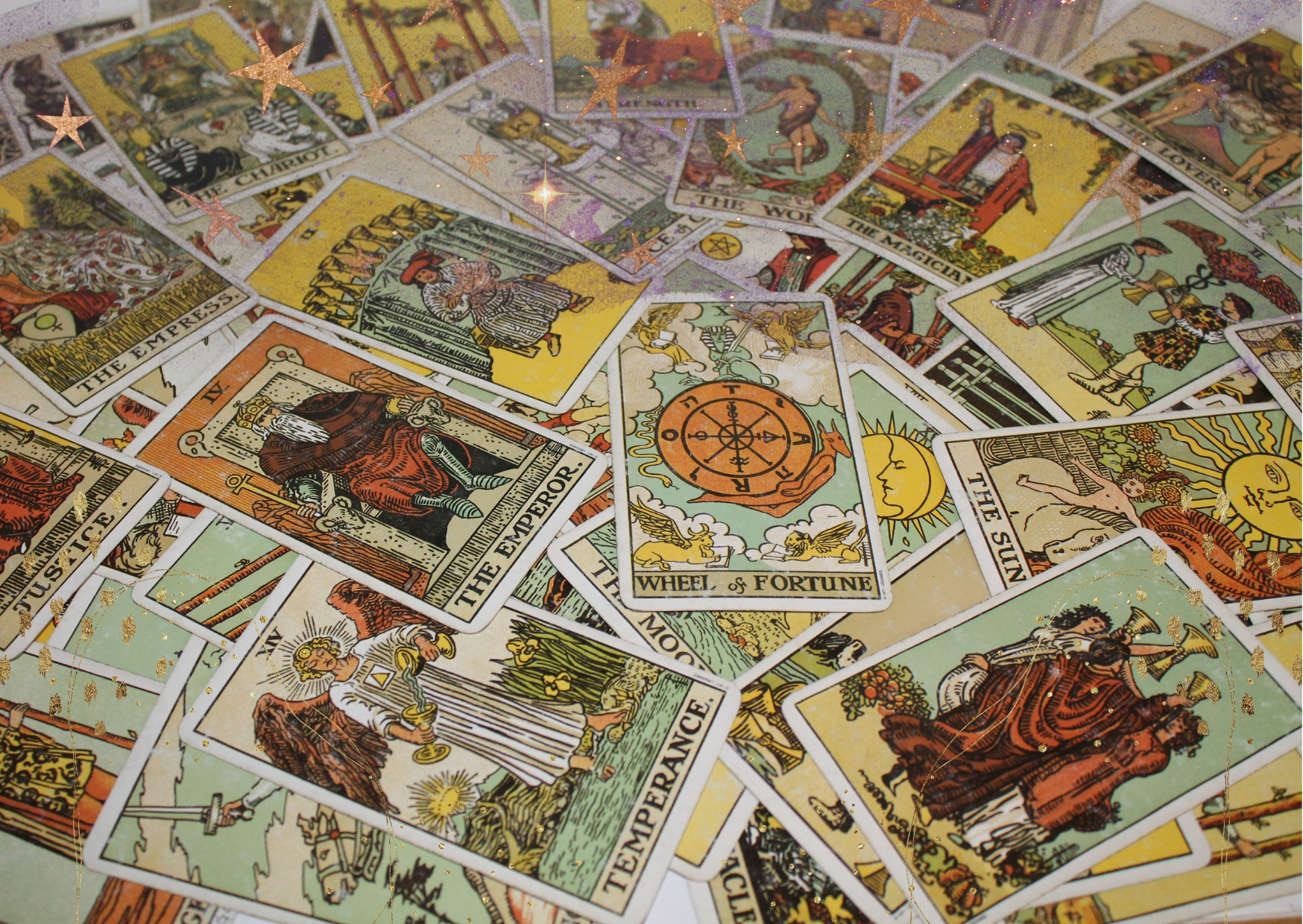
Let’s start by looking at the origins of Tarot.
Tarot, as we know it now, was invented sometime in the middle 15th century in Italy. It closely mirrored the playing cards of the day. Some believe that people had started using playing cards for divination purposes, and the tarot was just a refined version of these cards. These basic playing cards had four suits of ten cards each. These cards were brought to Europe from the Islamic world. It is thought that tarot originated when mystics and astrologers started using ordinary playing cards to tell fortunes.
During the 15th century, special cards were added to the playing cards. Later, these became known as the Major Arcana cards, then called the trumps or triumphs. The Major Arcana cards consist of 22 cards with titles rather than numbers and suits. Each one has a strong symbolic meaning, and they are considered to be the 'leaders' of the Tarot deck. The remaining 56 cards are referred to as the Minor Arcana. Usually, these cards are split into four suits: wands, cups, swords and pentacles. Though there are many variations of this.
Tarot has evolved many times ever since its original form, becoming more complex and rich in symbolism. The cards themselves have gained meaning over the years from the cultures that adopted their use. Some cards have come and gone, like The Pope, The Juggler, The Arrow etc. However, around the 17th century, tarot evolved into the form we now know. Many famous alchemists and prophets have used Tarot, including Nostradamus and Aristotle.
For centuries, people have been using symbols as a type of divination. Tarot is no different. Each of the 78 cards has an individual meaning. Tarot is an interactive Divination art. The cards interact with each other, giving them new and more complex meanings.
You place the cards into various spreads where the placement of each card gives it even further meaning. Where cards fall in the spread has a lot to do with how they interact with each other. A card representing the past will influence a card representing the present and the future. There are many different spreads, including the Celtic Cross, the three-card spread, the Spread of Fates, a single card reading, The Circle and Cross and The Ancestors, to name a few.
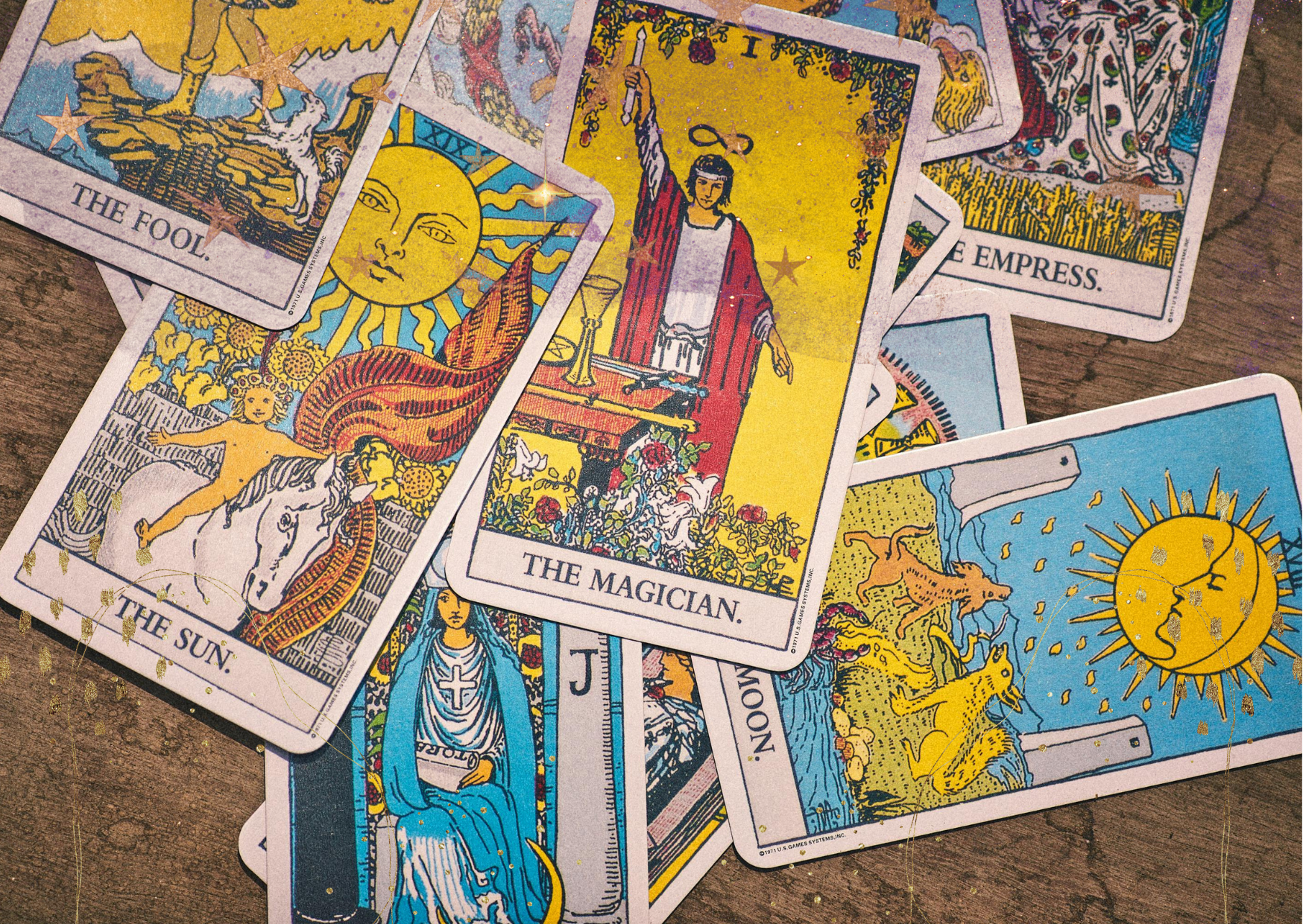
Understanding The Major Arcana - The Fool's Journey
It is the Major Arcana that is considered the heart of the tarot deck. They are also known as the Trump Cards. There are 22 Cards that make up this part of the tarot deck. The Major Arcana is not associated with suits or court cards like the rest of the Tarot Deck.
The Major Arcana represents life and its cycles from birth to death. It symbolises the physical, spiritual, intellectual and emotional aspects of humankind and its relationship to the universe. In the Major Arcana, the 22 cards represent different archetypes. The archetypes include a nurturing mother, a strong, commanding, authoritative type, a traditional religious figure, a mystic spiritual figure and so on. These archetypes represent either real or spiritual figures in one's life.
If you look at the artwork on a Major Arcana card, you will see a scene that has symbolic elements. Also on many decks, the cards feature the card’s title and the number of the Major Arcana card in Roman Numerals from 0 to 22. There are some decks, however, where the major arcana only have pictures. This is the same way the first decks were. The speculation is that there were no numbers or words on those decks because the majority of people at that time were illiterate.
If you look closely at the pictures on the Major Arcana deck, you will find that the pictures are indeed steeped with symbolism. The Major Arcana also relates to those things regarding one's higher purpose for being on the planet. It tells of one's journey in life, especially in relation to their personal character development. The numbers on the card, ranging from 0 to 22, depict the fool's journey from birth to death and from innocence to wisdom to hopefully enlightenment. The Major Arcana tells of the journey one has to take to reach enlightenment in their lifetime. In addition to focusing on our spiritual selves, the Major Arcana also gives us answers in relation to major life events. It addresses things such as family, social relationships, jobs and other major milestones we face in our lives.
The Major Arcana represents aspects of the human experience that we all go through in our lives. It looks at our spiritual selves, our hopes, our fears, our joys and sadness. It is recommended that when one starts to read tarot cards, they familiarise themselves with the Major Arcana first. Once you get used to them, they help unlock your intuition so you can interpret the rest of the cards in relation to them in a tarot spread.
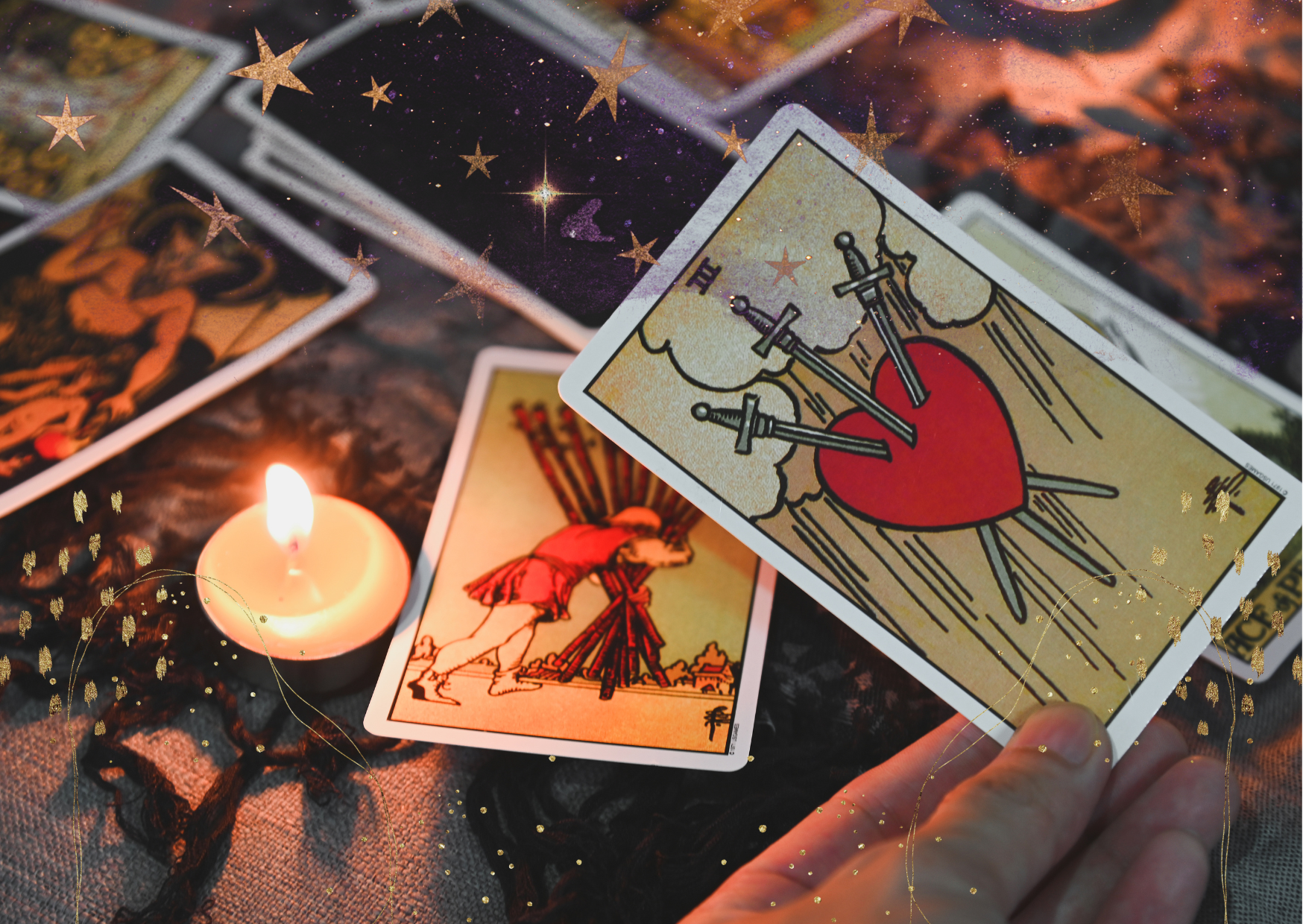
Most of the cards in the tarot deck are Minor Arcana cards. These cards fill out the deck, making it more balanced and complete. The 56 cards of the Minor Arcana are split into four suits. Each suit represents a different aspect of life. Numerology can be used in conjunction with the Minor Arcana as the cards are numbered from 1 to 10, or Ace through 10. There are four nobles cards in each suit as well: the Page, Knight, Queen and King. This makes 14 cards in each suit.
The suit of Wands represents the element of Air. This is the realm of thoughts, ideas and inspiration. They can also show our fears and desires, which are the things that tend to motivate us. When a lot of Wands appear, this can indicate that you are caught up in your own thoughts and ideas, unable to take action. It can also be a sign that things are just beginning.
The suit of Cups represents the element of Water. This is the realm of our emotions and is the response we have to our thoughts and ideas. It is this response that determines the actions we will or won’t take. Cups can show us our subconscious emotions and feelings towards a situation. When a lot of Cups appear in a reading, this can indicate that you are currently stuck in your emotional response to something. This could be joy or sorrow. The Cups represent love, relationships, connection and imagination.
The suit of Swords represents the element of Fire. This is the realm of action. Once we have the idea (Wands) and the emotional response (Cups), we begin to take action (Swords) on our dreams and goals. This can be a struggle as we try to turn our thoughts into our reality. It is also where we learn the most. A lot of Swords in a reading can indicate that there is a lot going on. Swords are logical rather than emotional and tend to show us the truth of the situation, even when that isn’t what we want to hear.
The suit of Pentacles represents the element of Earth. This is the realm of manifestation, abundance and scarcity. They remind us to keep our feet on the ground and show us the physical manifestation of our actions brought about by our emotional response to our thoughts and ideas. Pentacles can represent money, the home and mastering skills. A lot of Pentacles in a reading can show the results of your hard work or that the rewards are taking shape, the goal is achieved or at least well on the way to success.
Here is an overview of the meaning behind the number and noble cards of the Minor Arcana.
One/Ace: Represents beginnings, action, will, new ideas, creative power, potential, first causes, primary impulses, and positive activities.
Two: Represents partnerships, relationships, polarities, balancing, duality, choices, patience, stillness, and positive and negative.
Three: Represents synthesis, growth, creativity, abundance, collaboration, friendship, artistic expression, refining plans, and preparing to take action.
Four: Represents foundations, discipline, work, order, stability, solidity, tangible achievement, and practical attainment.
Five: Represents new cycles, change, progress, shifts, adjustment, fine tuning, instability, challenge, versatility, freedom, and courage.
Six: Represents balance, health, beauty, harmony, contentment, relaxation, satisfaction, equilibrium, marriage, family, and sympathy.
Seven: Represents spirituality, wisdom, perfect order, the macrocosm, religion, luck, magic, and multiple options.
Eight: Represents victory, will, success, regeneration, rebirth, re-evaluating, putting things in order, and setting priorities.
Nine: Represents compassion, integration, movement, flexibility, fulfilment, attainment and benevolence.
Ten: Represents transition, renewal to a new cycle, completion, wholeness, mastery, excess, and overabundance.
The Page: The Page is a bearer of messages and the harbinger of communication. This card represents youth and the beginnings of maturity.
The Knight: The Knight is a traveller, one who brings change and good deeds into the world. This card represents new relationships, friendship, courage and stability.
The Queen: The Queen is a strong female. She has the ability to lead, listen and guide. She represents the completion of relationships, jobs and projects, also a strong, emotional person who knows where they are going and what they want.
The King: The King is a strong male figure. He is the leader of the suit, the end of it and the highest mark. He represents a mature and wise person who knows what they can and cannot accomplish.
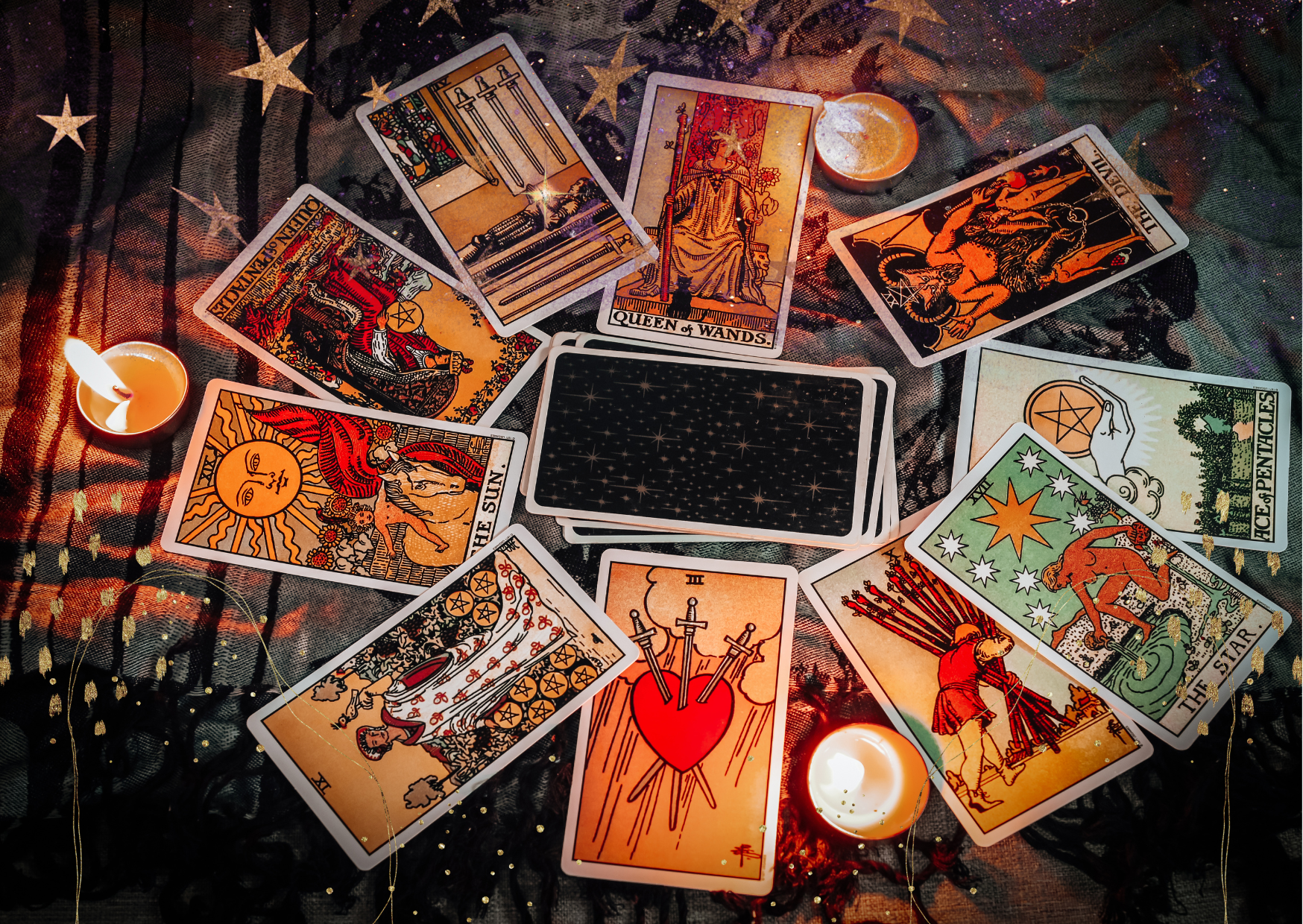
After that overview of the origin and meaning of the cards, I have one question to answer. How could a Tarot reading actually help me?
When done traditionally, a Tarot reading can put everything into perspective in a clear and understandable way. Every Tarot reading is prefaced by a question. Often, each card will then come up in the past, present, or future position and will shed some light on the topic of your question.
Whether or not you believe in spiritual or esoteric things, or even in the art of reading the future, a Tarot reading can help you better understand your own thoughts. You'll realise potentially dangerous patterns in your life, and get a better understanding of yourself. Even the question that you ask can help you understand something about yourself, and in this way, a Tarot reading can truly help you.